
Table of Contents:
Marketing’s Reach Problem and Why RCS Solves It
Marketing teams today have no shortage of channels, but reach is becoming harder to earn. Email inboxes are overcrowded, social algorithms are unpredictable, and apps require downloads customers don’t always want or go through with. SMS delivers reach but lacks the visual and interactive experiences modern brands need. There is a divide that needs to be crossed when it comes to marketing, and I know we can all feel it.
RCS (Rich Communication Services) bridges that gap. It combines the universal reach of text messaging with rich, app-like features, giving marketing teams a powerful way to connect with customers directly inside their native messaging apps.
What Makes RCS Different for Marketers
RCS upgrades traditional SMS by creating branded, media-rich conversations. Instead of plain text, marketers can send messages that include:
- Brand logos and verified sender profiles
- High-resolution images and videos
- Carousels showcasing multiple products or offers
- Interactive buttons and suggested replies
All of this happens without requiring customers to install an app or create an account, reducing friction while increasing engagement.
Expanding Reach Without Adding Another App
One of RCS’s biggest advantages is where it lives: the native messaging inbox. Customers already check their messages multiple times a day, making RCS an ideal channel for marketing communications.
By using RCS, marketing teams can:
- Reach customers directly on their mobile devices
- Avoid reliance on third-party platforms and algorithms
- Deliver consistent experiences at scale
As RCS adoption continues to grow globally, it’s quickly becoming a foundational channel for mobile-first marketing strategies.
Turning Campaigns Into Interactive Experiences
RCS also transforms one-way promotions into two-way experiences. Instead of asking customers to click out to a website or app, brands can create conversations directly inside the message. Common marketing use cases include:
- Product launches with swipeable carousels
- Limited-time offers with “Buy Now” or “View Deal” buttons
- Event promotions with RSVP or calendar options
- Personalized recommendations based on past behavior
This interactivity reduces drop-off and helps guide customers toward action faster.
Building Trust With Branded Messaging
Trust is a requirement in mobile marketing. RCS supports verified sender identities, which means customers can immediately see who a message is from based on their logo and brand name being clearly visible. For marketing teams, this leads to:
- Higher open and engagement rates
- Reduced risk of spoofing or phishing confusion
- Stronger brand recognition with every interaction
When messages look and feel authentic and official, customers (and people in general) are more likely to engage.
Personalization at Scale
Modern marketing depends on relevance. RCS supports dynamic content and personalization, allowing teams to tailor messages by audience segment, location, behavior, or lifecycle stage.
Examples include:
- Welcome campaigns for new subscribers
- Re-engagement messages for inactive users
- Loyalty offers based on purchase history
- Location-based promotions for nearby stores
These personalized experiences help marketing teams deliver the right message at the right moment without overwhelming customers.
Measuring What Actually Works
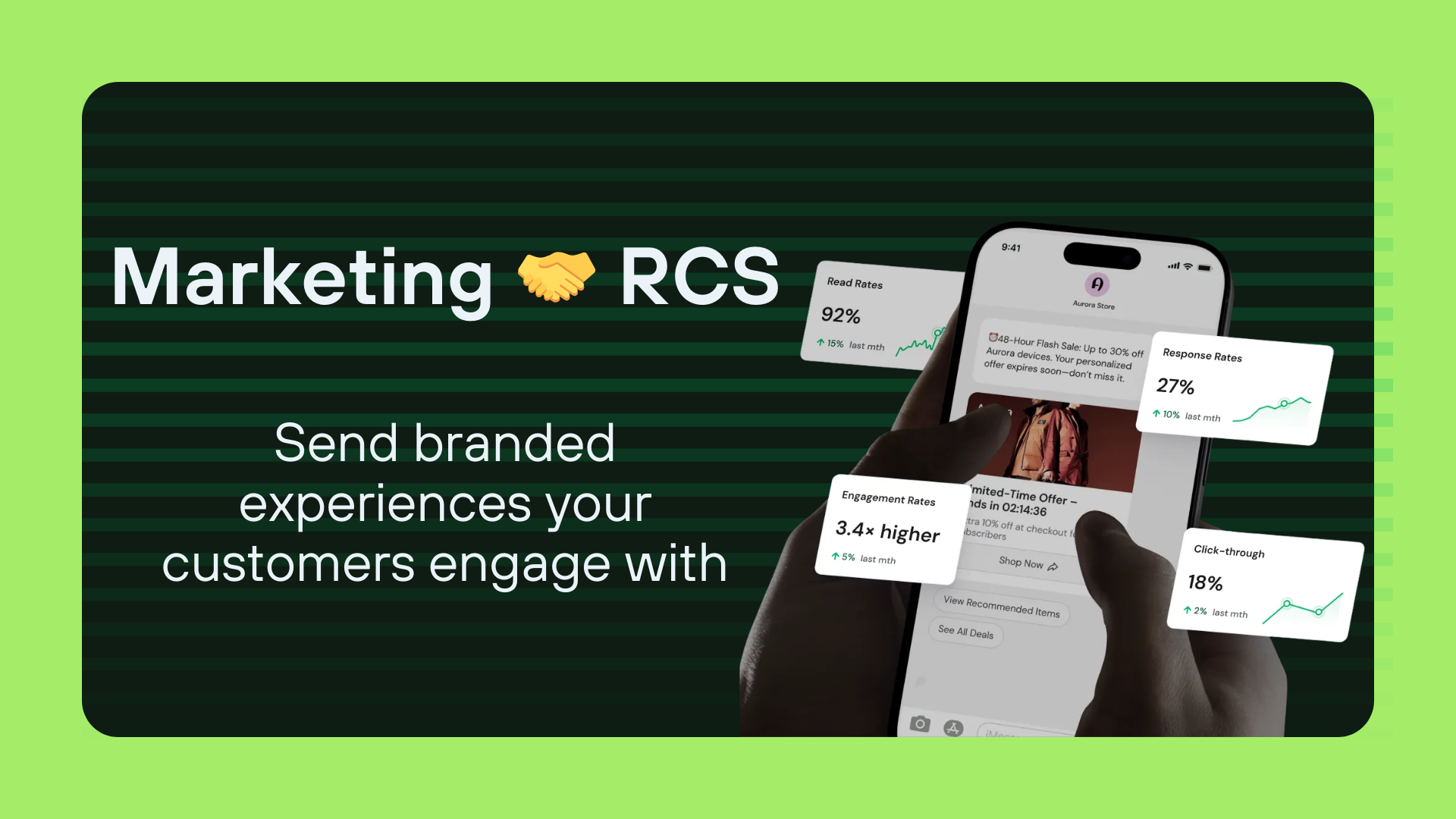
Unlike traditional SMS, RCS provides deeper performance insights. Did you know that with RCS, you can track delivery confirmations, customer opens at a singular and campaign level, and see how users engaged with interactive elements (typed out questions to AI chatbot, user journey, and more?) This data makes it easier to:
- Optimize campaigns in real time
- Compare performance across channels
- Prove ROI to stakeholders
- Take learnings and apply them to other campaigns
With clearer analytics, RCS becomes not just a messaging tool, but a measurable driver of growth.
RCS as Part of a Modern Marketing Stack
RCS shouldn’t be a replacement to your broader omnichannel strategy, it works best when it’s integrated with what you currently use. Teams can use it alongside email, push notifications, and social messaging to create cohesive customer journeys. For example, your outreach campaign could look like this:
- Email for long-form content
- RCS for time-sensitive or high-impact moments
This flexibility allows teams to maximize reach without sacrificing experience.
The Future of Marketing Is Conversational
As customer expectations continue to evolve, marketing teams need channels that are immediate, engaging, and measurable. RCS delivers on all three, making it a powerful tool for brands looking to expand reach while standing out in crowded mobile inboxes.
For marketing teams ready to move beyond basic text and fragmented channels, RCS offers a smarter way forward.
See RCS in Action
Don’t just take our word for it. Book a free, 30-minute demo to see how RCS can enhance your marketing team.